
Greetings from the President of NIT(Numazu Kosen)
Greetings from the President of NIT(Numazu Kosen)
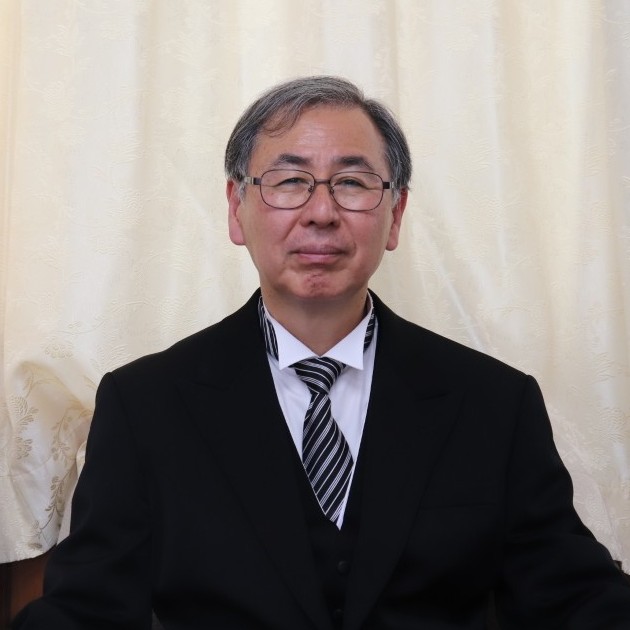
National Colleges of Technology (KOSEN) are “institutions of higher education” that provide a five-year integrated educational program for junior high school graduates, nurturing them into “practical engineers who meet the demands of the times.” Over its history spanning more than 60 years, Numazu National College of Technology (Numazu Kosen) has produced over 10,000 graduates. These alumni are active as outstanding engineers and scientists both in Japan and abroad, earning high praise from industry and society, and expectations for them continue to rise.
Unlike high school students, called “SEITO” in Japanese, Kosen students are referred to as “GAKUSEI.” This term, like that used for university students, implies that they are self-directed learners. It also means that they are expected to assume adult responsibilities from a young age; indeed, it appears that many students truly live up to this title.
Kosen students begin studying a wide range of specialized subjects through an intensive curriculum starting in their first year of the undergraduate program, and by the time they complete their undergraduate studies, they graduate as highly skilled engineers. Not only that, but they study not only mathematics and science—which are closely related to their specializations—but also general subjects such as foreign languages, Japanese, and social studies, thereby developing the foundation to become individuals capable of driving innovation through collaboration with people from diverse backgrounds. Furthermore, in the Postgraduate Program, students receive even more advanced specialized education over two years following graduation from the undergraduate program, and graduates who meet the specified requirements are awarded a Bachelor of Engineering degree by the NIAD.
Approximately half of the undergraduate graduates find employment at companies and other organizations, with many of them working in research and development. Of the remaining half, some advance to the Advanced Course or transfer to a university to further hone their knowledge and skills. Others, after graduating from the Advanced Course or a university, go on to graduate school to pursue careers as researchers or highly skilled engineers. Among them are those who change fields from their undergraduate specialization and embark on new paths. The variety of career paths available before entering the workforce is a distinctive feature of KOSEN.
Kosen education is not limited to classroom instruction alone. For example, we have concluded exchange agreements with numerous universities and research institutes both in Japan and abroad, providing opportunities for students to broaden their horizons through internships and joint research projects. While Kosen is famous for its robot competitions, students also participate in deep learning contests, design competitions, programming contests, and English presentation contests, gaining practical experience. We are also promoting entrepreneurship education through these contests. We believe these initiatives help unlock students’ potential.
Shizuoka Prefecture ranks among the top in the nation in terms of the value of manufactured goods shipped. Eastern Shizuoka Prefecture, where Numazu Kosen is located, is home to production bases and research institutes of major corporations, as well as a diverse range of small and medium-sized manufacturing companies. We receive various forms of support and cooperation from these companies and local governments. In return, our school contributes to the local community and industry through education, human resource development, and joint research. One example of this is our role in the “Mt. Fuji Foothills Medical Device Development Engineer Training Program” (commonly known as “F-met”), a continuing education course for working professionals that trains core engineers in medical device development as part of Shizuoka Prefecture’s Pharma Valley Initiative. Through this program, we play an active role in promoting the eastern Shizuoka region, where the pharmaceutical and medical device industries thrive. We intend to continue and further develop these contributions to the region.
Numazu National College of Technology will continue to produce human resources who will serve as the backbone of Japan’s industry—a nation built on science and technology—while fulfilling its role as a “hub of scientific and technological knowledge” in Eastern Shizuoka Prefecture. We ask for your continued support.
Kotaro Yamada, President